02Case study
Aerial Audio: building the aircraft the technology needed
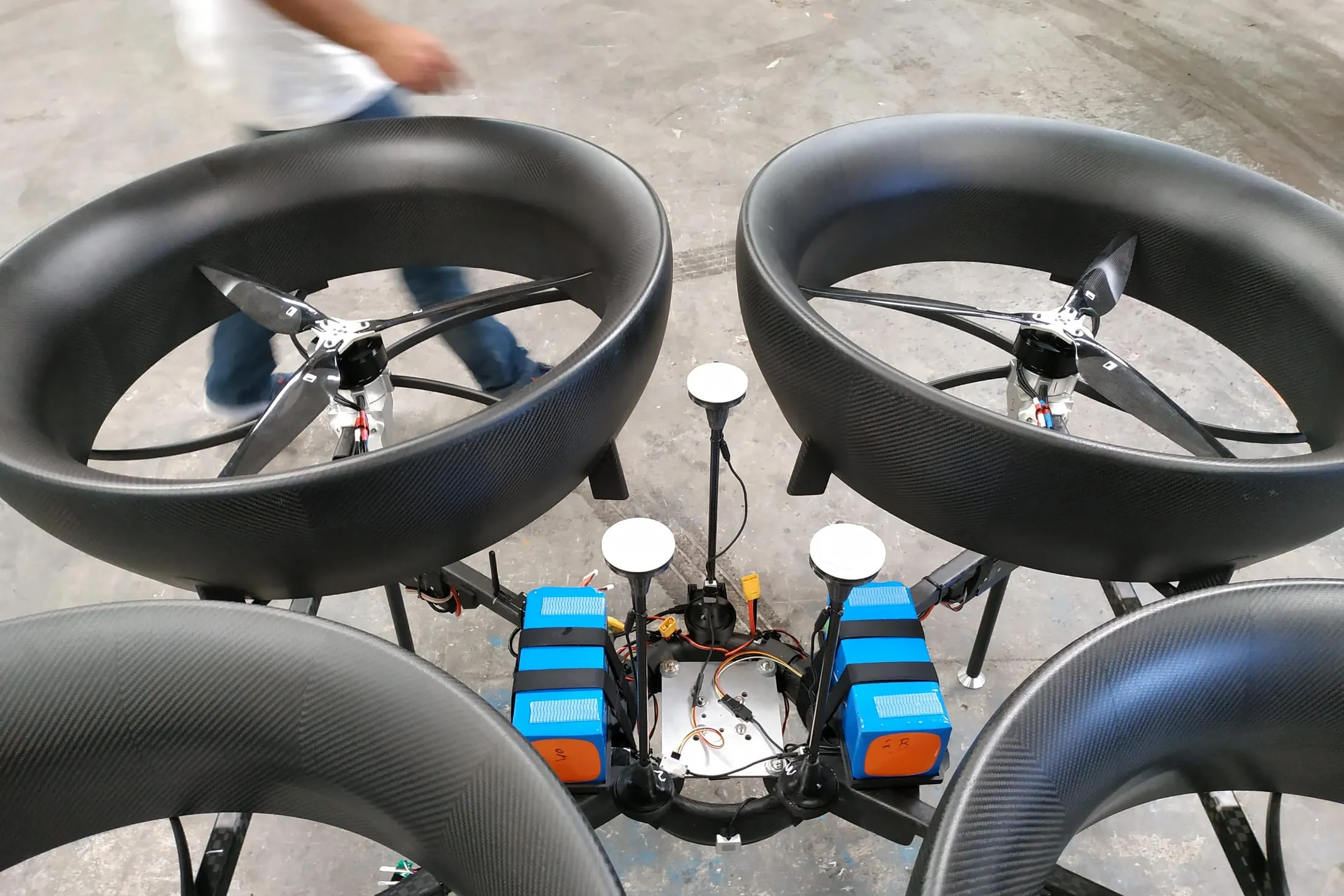
Five years designing and building the airframes, RF links and ground stations a microphone array needed in order to be tested at all.
- Role
- Airframe design and build, flight systems, RF, flight test
- Dates
- 2015–2019
- Status
- Superseded · became Konos
- Disciplines
- Airframe design · Flight systems · RF and comms · Flight test
- Processes
- 3D printing · Composite layup · Carbon fibre · Wiring and power
Problem
Dotterel ran two development streams: passive noise reduction, which meant shrouds and propeller design, and the microphone technology. Aerial Audio was the second. It began as a six-microphone MVDR beamformer, and the only way to know whether it worked was to fly it.
In 2015 that was the hard part. Consumer drones were not payload platforms. DJI was building Phantoms, and nothing available would carry what we needed to test. Before the array could be evaluated at all, someone had to build the aircraft, the downlink and the ground station.
Constraints
- No commercial platform existed in the payload class the array required
- Every supporting capability had to be built before the technology could be assessed
- Field demonstrations overseas, in unknown conditions, without support
- One person across aero, structures, power, RF and flight operations
- More than eight airframes built across the programme, from small test platforms to larger octocopters
Decisions
Early flying used an SK450 on a HobbyKing controller for shroud testing, and a Skylark M4-680 for the array, running an old DJI flight controller first, then PX4, then Pixhawk Cube. The first array captures were 3D-printed microphone mounts, a Zoom recorder flown on the aircraft, and processing in post.
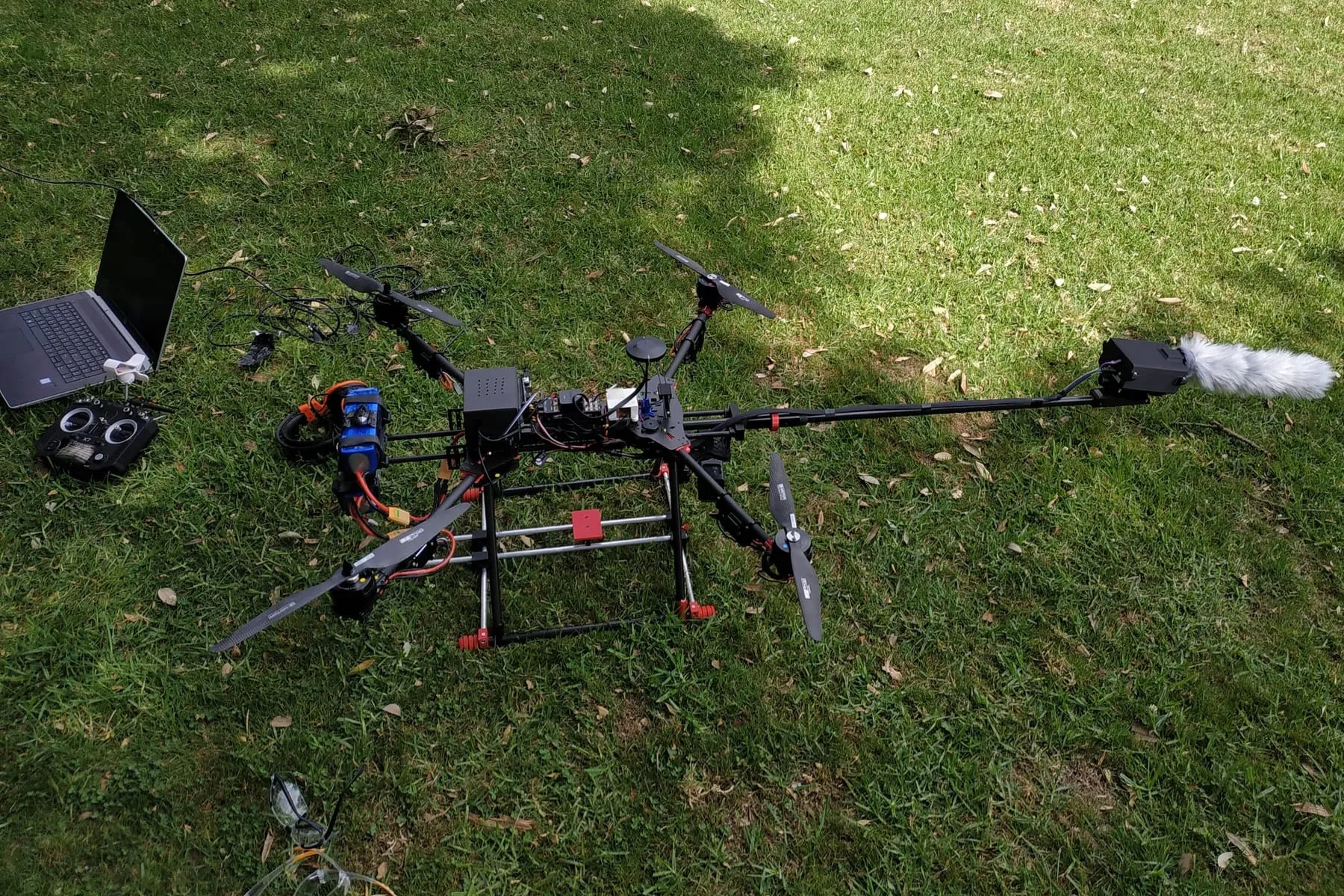
On the larger octocopters my involvement was recovery: coming in when a build ran into trouble to get it back on schedule.
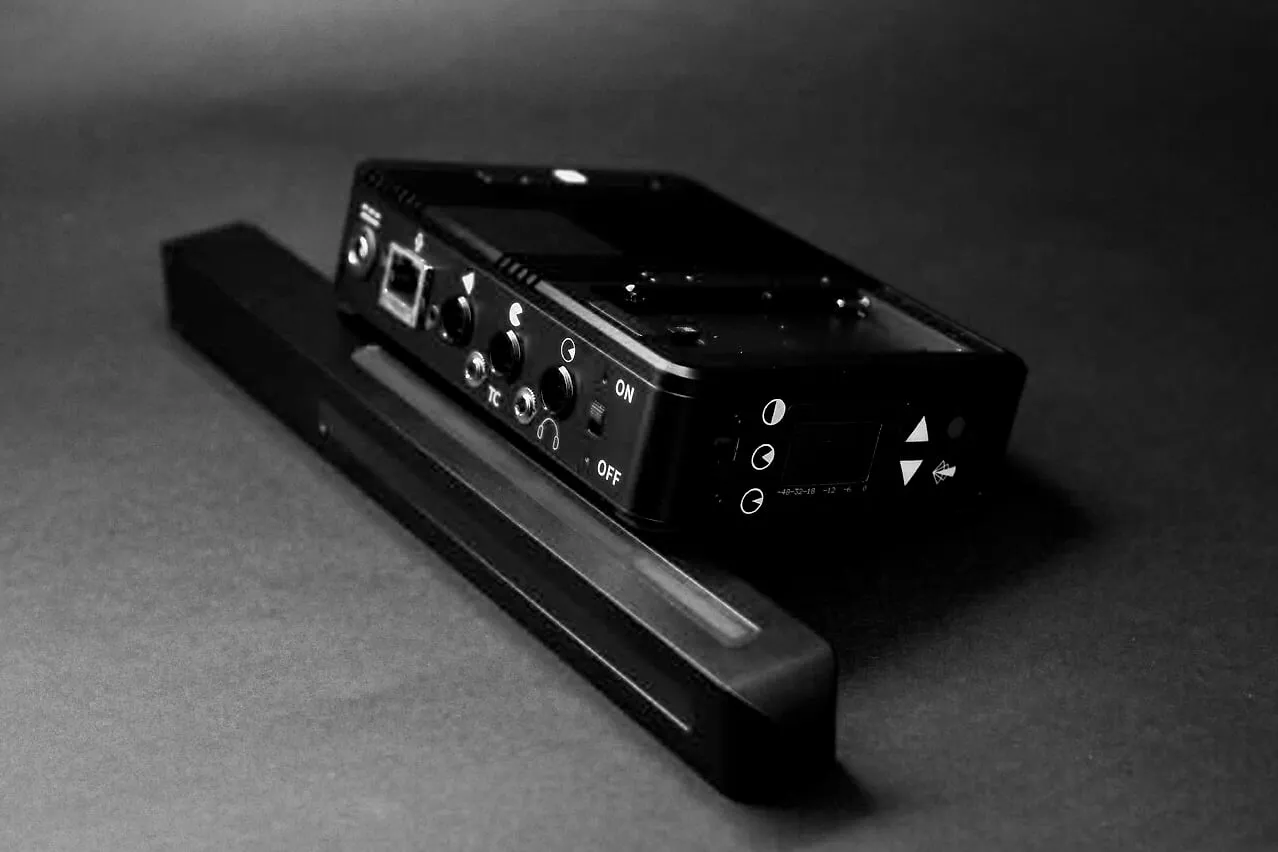
The Skylark was too large to travel with, so for the US demonstrations I built a coaxial aircraft on 12.5-inch props that folded into a Pelican case and deployed from it. Purpose-built drone data links barely existed yet, so the audio downlink was a GoPro and an HDMI transmitter, with audio injected into the HDMI stream and split back out to headphones on the ground.
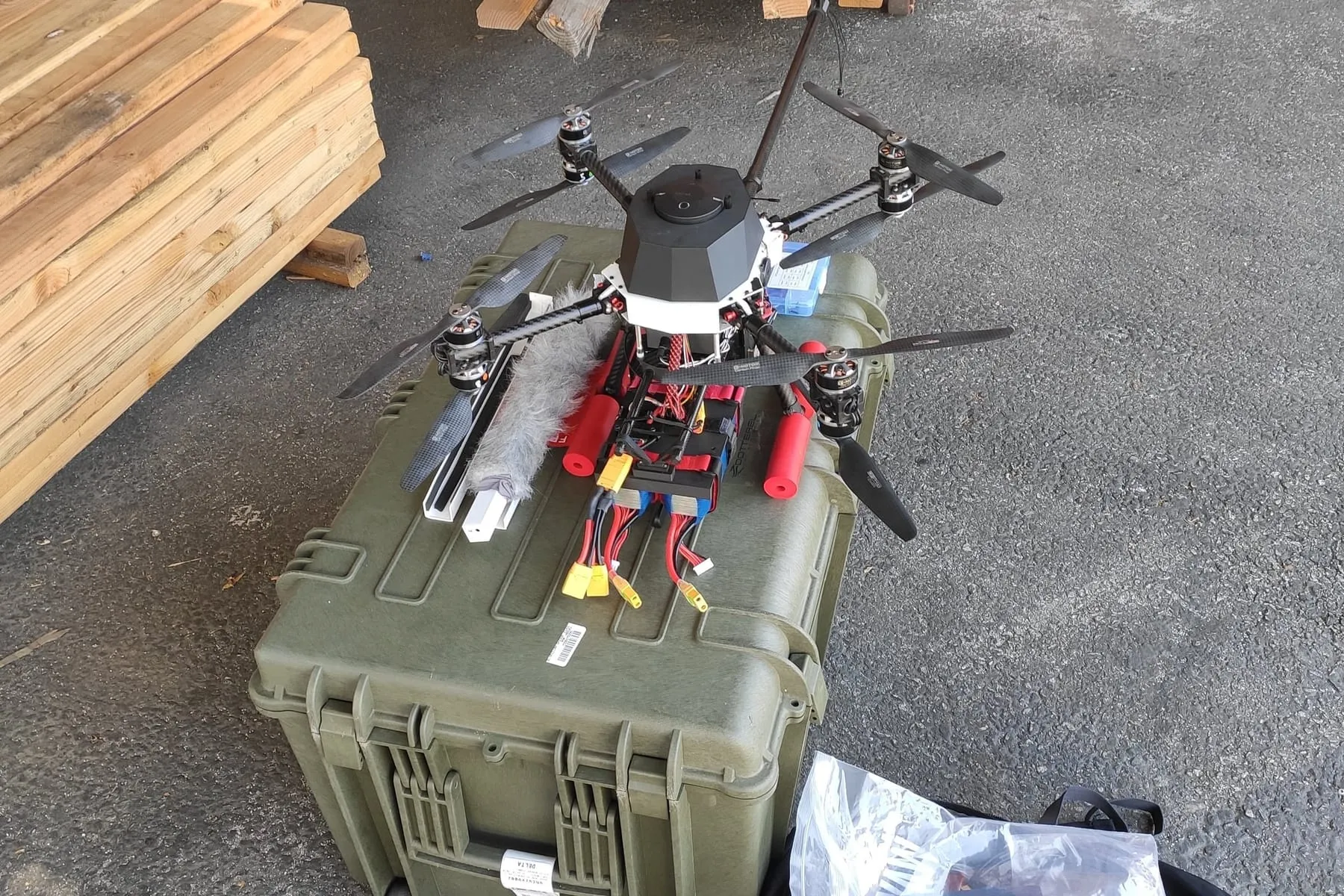
It reached 45 °C in Los Angeles on the day, past the operating range of the FrSky control gear. The payload was unaffected.
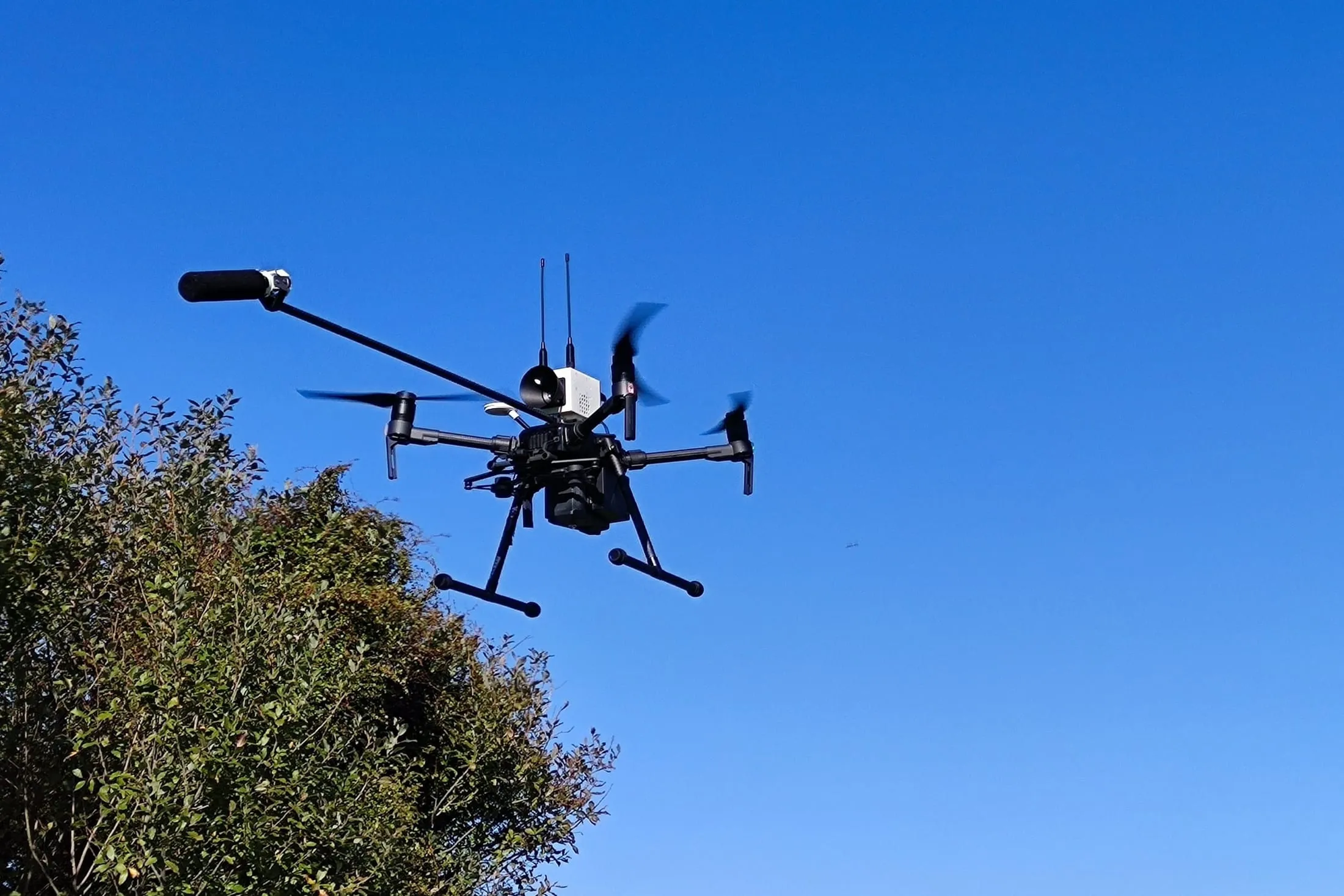
When DJI shipped the M210 the platform problem largely solved itself, and the work shifted to making Aerial Audio deploy onto it: a Doodle Labs mesh link, a Raspberry Pi bridging I2S audio into the radio, and a base station a tablet could join wirelessly to monitor. For line-of-sight through terrain I built a Mavic-class relay payload, tested in forest for a New Zealand search and rescue demonstration.
Outcome
Demonstrated in the United States in 2018 to a metropolitan police department and a fire service, and in New Zealand for search and rescue.
The airframes were donated to the University of Auckland when we wound down platform work.
The M210 payload put array, processing and radio in one deployable unit. It became the basis for Konos.
See the Konos case study.
More work
 03Parametric blade tooling: closing the loop between optimiser and manufactureA parametric tool taking optimiser output directly to manufacturable geometry, and measured parts back to parameters.Read case study →2020Delivered · used in production design work
Contact
Auckland, New Zealand · NZ citizen with Australian work rights